
Blog · 2026-10-09
AI-Based CCTV vs Traditional CCTV: What’s the Difference?
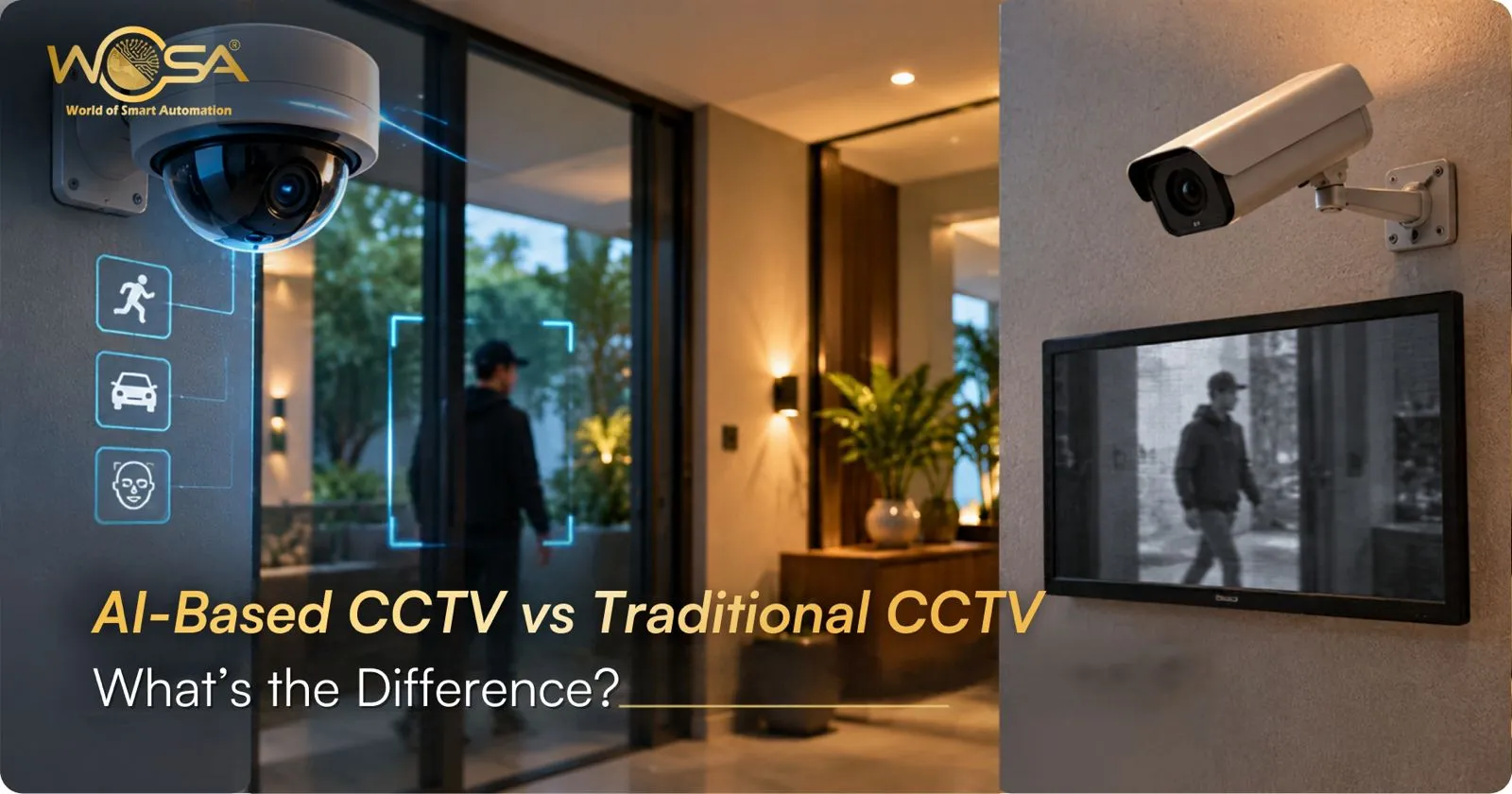
CCTV cameras have become an important part of modern home and property security. But security technology has evolved beyond simply recording video. AI-based CCTV systems can analyze what they see and provide more meaningful alerts, while traditional CCTV systems primarily focus on capturing and storing footage.
So, what is the difference between AI-based CCTV and traditional CCTV, and which approach makes sense for a modern smart home?
What Is Traditional CCTV?
Traditional CCTV systems use cameras to capture video and send the footage to a recorder or storage system. Homeowners or security teams can review the footage when an incident occurs.
These systems can provide continuous surveillance and recording, making them useful for monitoring entrances, driveways, parking areas, corridors, and other important locations.
However, traditional CCTV generally requires a person to monitor or review footage to determine what happened.
What Is AI-Based CCTV?
AI-based CCTV adds intelligent video analytics to camera surveillance. Instead of simply recording everything, an AI-enabled system can analyze video and identify specific events based on its capabilities.
For example, AI-powered cameras may be able to distinguish between people and vehicles, detect movement in defined areas, or generate alerts when specific events occur.
This can reduce the need to manually watch hours of footage and make security monitoring more proactive.
AI CCTV vs Traditional CCTV
|
Feature |
Traditional CCTV |
AI-Based CCTV |
|
Video recording |
Yes |
Yes |
|
Continuous surveillance |
Yes |
Yes |
|
Video analysis |
Mostly manual |
AI-assisted |
|
Person detection |
Limited/model dependent |
Available on compatible systems |
|
Vehicle detection |
Limited/model dependent |
Available on compatible systems |
|
Smart alerts |
Basic/motion-based |
More contextual on supported systems |
|
Footage review |
Mostly manual |
AI-assisted search/analysis on compatible systems |
|
Integration |
Depends on system |
Can integrate with smart-home/security systems |
The exact AI capabilities vary significantly between camera models, software, and manufacturers.
Why Is AI CCTV Useful for Smart Homes?
Imagine receiving an alert because a person has entered a defined area, rather than receiving notifications every time a tree moves or an animal passes through the camera's view.
AI-based surveillance can help homeowners focus on potentially relevant events instead of checking every recorded movement.
For a smart home, cameras can also become part of a broader security ecosystem alongside smart locks, video door phones, alarms, lighting, and access control.
WOSA provides smart security solutions as part of its broader home automation offering.
Explore WOSA Home Automation
Is AI CCTV Better Than Traditional CCTV?
It depends on the property's security requirements.
Traditional CCTV can be sufficient when the primary requirement is reliable video recording and monitoring. AI-based CCTV can be useful when homeowners want more intelligent detection, event-based alerts, and easier video analysis.
For a new luxury villa or connected home, it can also make sense to consider how surveillance will interact with the rest of the automation system.
FAQs
What is the difference between AI CCTV and traditional CCTV?
Traditional CCTV primarily records video, while AI-based CCTV can analyze video and identify certain events or objects depending on the camera's capabilities.
Does AI CCTV record video?
Yes. AI-enabled cameras can record video while also applying intelligent analytics to the footage.
Can AI CCTV detect people?
Many AI-enabled cameras support person detection, but the exact capabilities depend on the camera and software.
Can AI CCTV reduce false alerts?
AI-based detection can potentially reduce irrelevant motion alerts by distinguishing certain objects or events. However, performance depends on the camera, environment, configuration, and technology used.
Can AI CCTV be integrated with home automation?
Compatible systems can integrate surveillance with other smart-home technologies, depending on the products and automation platform being used.
Conclusion
The key difference between AI-based CCTV and traditional CCTV is how the captured video is used. Traditional CCTV focuses primarily on recording, while AI-based systems can add intelligent analysis and event detection.
For homeowners looking to build a connected security system, AI CCTV can be considered alongside smart locks, lighting, access control, and other home automation technologies.