
Blog · 2026-11-20
Smart Home Technology Trends Homeowners Should Know in 2027
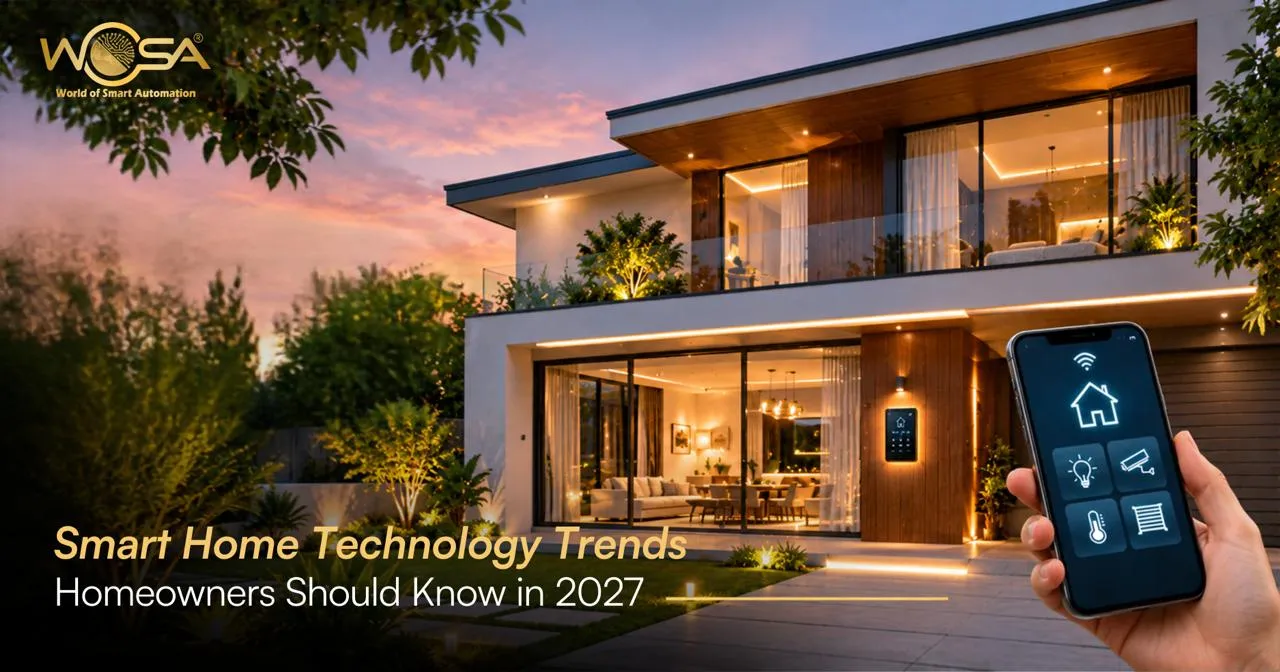 Smart homes are evolving beyond simple smartphone-controlled lights and connected appliances. Modern home automation is moving towards intelligent systems that connect lighting, security, climate control, entertainment and energy management into one coordinated environment.
As technology continues to develop, homeowners are increasingly looking for solutions that offer convenience, improved security, personalised experiences and better control over everyday activities.
In 2027, several developments are expected to influence how people design, build and upgrade their homes. From Artificial Intelligence (AI) and voice-controlled systems to smart energy management and connected security, these innovations are making home automation more practical for different types of properties.
For homeowners planning a new house or upgrading an existing property, understanding these smart home technology trends in 2027 can help them make better decisions about their future living spaces.
1. AI-Powered Smart Home Automation
Artificial Intelligence is becoming an important part of modern home automation. Traditional automation systems generally follow predefined instructions, such as switching on lights at a particular time or adjusting the AC according to a schedule.
AI-powered systems have the potential to go further by analysing usage patterns, occupancy and environmental conditions to make more adaptive decisions.
For example:
-
Lighting can respond to occupancy and ambient brightness.
-
Climate settings can adapt to daily usage patterns.
-
Security systems can analyse camera activity and identify unusual events.
-
Automation routines can become more personalised based on household preferences.
AI does not mean that every home will automatically make decisions without user involvement. Homeowners should have control over permissions, settings and automated actions.
As these capabilities develop, AI-powered home automation is expected to become an important part of connected living.
2. Intelligent Lighting Automation
Smart lighting is moving beyond basic remote switching. Modern lighting automation allows homeowners to create customised environments according to their activities, preferences and daily schedules.
In 2027, intelligent lighting solutions are expected to place greater emphasis on personalised scenes, occupancy detection and integration with other home systems.
Some practical applications include:
Automated lighting schedules: Lights can operate according to predefined routines.
Motion-based lighting: Sensors can activate selected lights when movement is detected.
Customised lighting scenes: Different lighting settings can be configured for reading, working, relaxing and entertainment.
Integrated lighting control: Compatible lighting systems can work with curtains, sensors and other automation functions.
For example, a movie scene could dim the living room lights and close the motorized curtains through one command.
Explore WOSA's lighting automation solutions to understand how intelligent lighting can be incorporated into modern homes.
3. Smarter Home Security with AI and Connected Devices
Home security is another area where technology is evolving rapidly. Modern security solutions combine connected cameras, smart locks, video door phones and sensors to provide homeowners with more convenient monitoring and access control.
AI-based CCTV systems may offer features such as person detection, vehicle detection and activity classification, depending on the camera model and software.
Other smart security applications include:
-
Fingerprint and PIN-based smart door locks.
-
Video door phones for visitor communication.
-
Remote monitoring through compatible mobile applications.
-
Motion and intrusion detection sensors.
-
Automated gate and entrance controls.
-
Configurable security notifications.
For homeowners in Hyderabad, these solutions can be particularly useful when planning security for independent houses, apartments and villas.
However, connected security systems should be supported by strong passwords, secure network configurations, software updates and appropriate user permissions.
4. Energy-Efficient Smart Home Management
Energy management is becoming an important consideration in modern home automation.
Smart systems can help homeowners monitor and manage selected electrical devices, lighting and climate-control equipment. By using schedules, occupancy information and connected controls, households can reduce unnecessary operation.
Some emerging applications include:
Smart energy monitoring: Understand how connected devices and selected circuits consume electricity.
Automated AC control: Configure compatible climate systems according to usage schedules.
Occupancy-based lighting: Reduce unnecessary lighting operation in unoccupied spaces.
Solar integration: Coordinate compatible solar generation and household energy consumption.
Smart EV charging: Manage compatible electric vehicle charging according to schedules and available energy.
The goal is to make energy usage more visible and manageable. Actual electricity savings depend on the home's equipment, usage patterns and automation configuration.
The KNX Association is developing its ecosystem around building efficiency and energy management, including integration with photovoltaic systems, batteries and electric vehicle charging.
5. Voice-Controlled Smart Homes
Voice assistants are making home automation more accessible by allowing users to operate compatible devices through spoken commands.
Instead of opening an application or using a physical switch, homeowners can use voice commands to control selected lights, curtains, entertainment equipment and climate settings.
Examples include:
-
Turning on bedroom lights.
-
Adjusting compatible AC settings.
-
Closing motorized curtains.
-
Activating a configured movie scene.
-
Controlling supported entertainment equipment.
Voice control can be particularly convenient when users are occupied with other activities.
In 2027, voice interfaces are expected to become more natural and context-aware, although available languages, integrations and supported commands will continue to vary between platforms.
6. Greater Interoperability Between Smart Home Devices
One challenge homeowners face is that not every smart device works with every automation platform.
A smart bulb from one manufacturer may not integrate directly with a control system from another manufacturer. This can create multiple applications and separate control environments.
The industry is moving towards better interoperability through standards such as Matter and improvements in established automation technologies.
The Connectivity Standards Alliance develops Matter, an open smart home connectivity standard designed to improve communication between compatible devices across supported ecosystems.
For homeowners, compatibility should be an important consideration when selecting new products.
Before purchasing equipment, check whether it supports your preferred control platform, whether additional gateways are required and whether the system can be expanded later.
7. Growth of Wired and Wireless Home Automation
Homeowners now have different options for installing automation systems, depending on the property's infrastructure and requirements.
Wired automation: Technologies such as KNX are commonly considered for new construction and major renovation projects. They allow automation infrastructure to be planned alongside electrical systems.
Wireless automation: Technologies such as Zigbee can be suitable for selected existing homes where additional control wiring is difficult.
Both approaches have their own advantages and installation considerations.
For new homes in Hyderabad, planning automation during the construction stage can help coordinate wiring, control panels, lighting circuits and motorized curtain requirements.
For existing homes, an assessment of electrical infrastructure, network coverage and device compatibility can help determine suitable retrofit options.
8. Motorized Curtains and Automated Living Spaces
Motorization is becoming an important part of modern residential design. Homeowners are exploring automated curtains, blinds, projector screens, TV lifts and other motorized applications.
These solutions can improve convenience while complementing contemporary interior designs.
For example, a morning routine could open selected curtains, while an entertainment scene could close them and dim compatible lights.
Motorized solutions can also be useful for large windows, double-height living spaces and luxury villas where manual operation may be inconvenient.
WOSA offers motorization solutions that homeowners can explore when planning connected living spaces.
9. Smart Home Networking and Reliable Connectivity
As more devices become connected, network infrastructure plays an increasingly important role in smart home performance.
A modern home may include cameras, smart panels, lighting controllers, televisions, voice assistants and other connected equipment. These devices need appropriate connectivity to communicate reliably.
In 2027, homeowners should pay greater attention to:
-
Reliable Wi-Fi coverage throughout the property.
-
Suitable router and network infrastructure.
-
Secure connections for smart devices.
-
Proper placement of wireless controllers and gateways.
-
Network capacity for future device additions.
A well-planned network helps connected systems operate more reliably and reduces common connectivity problems.
10. Personalised and Future-Ready Smart Homes
The future of home automation is not simply about adding more devices. It is about creating an environment that reflects the preferences and routines of the people living in it.
Personalised scenes, room-based controls, flexible automation schedules and integrated entertainment can make everyday activities easier.
For example, a family may prefer separate lighting scenes for different rooms, while another household may prioritise security, climate control and remote access.
When planning a smart home, homeowners should consider future expansion, product compatibility, software support and maintenance.
A flexible system can make it easier to introduce additional devices without redesigning the entire installation.
How WOSA Helps Homeowners Explore Smart Home Automation
Choosing the right automation system requires more than selecting individual smart devices. Lighting, security, climate, motorization and entertainment should be planned according to the property's layout and the homeowner's requirements.
WOSA offers home automation solutions covering these different areas, helping homeowners explore integrated technologies for modern apartments, independent houses and villas.
Whether you are planning a new home or upgrading an existing property, WOSA can help you understand available options and identify suitable automation features.
Homeowners can explore:
For more information about professional smart home integration, visit the CEDIA Smart Home Resource.
Frequently Asked Questions (FAQs)
1. What are the latest smart home technology trends in 2027?
Key trends expected to shape smart homes in 2027 include AI-powered automation, intelligent lighting, connected security, energy management, voice control, improved device interoperability and personalised automation.
2. How is AI changing home automation?
AI can analyse occupancy, usage patterns and environmental information to support more adaptive lighting, climate control and security functions. The capabilities depend on the installed devices and software.
3. Is smart home automation worth investing in 2027?
Smart home automation can improve convenience, control and security when the selected features match household requirements. The value depends on the installation cost, product quality, compatibility and long-term support.
4. Which smart home technology is best for new homes?
KNX-based wired automation and suitable wireless technologies such as Zigbee are options worth considering. The right choice depends on the construction stage, property infrastructure and required features.
5. Can I upgrade my existing home with smart technology?
Yes. Depending on the existing electrical infrastructure and device compatibility, wireless and retrofit-friendly automation solutions can be installed in many existing homes.
6. Does smart home automation help reduce electricity consumption?
Automation can help manage lighting and climate-control usage through schedules, sensors and monitoring. However, actual savings depend on household behaviour and the efficiency of the installed equipment.
7. What should I consider before installing a smart home system?
Consider your budget, property layout, device compatibility, network infrastructure, security requirements, future expansion and professional installation support.
8. Where can I find smart home automation solutions in Hyderabad?
WOSA provides home automation solutions in Hyderabad, including lighting, security, climate control and motorization. Visit WOSA's official website to explore the available services.
Conclusion
Smart home technology in 2027 is expected to focus on making connected living more intelligent, convenient and efficient. AI-powered automation, intelligent security, energy management, voice control and improved device integration are among the developments homeowners should understand when planning their properties.
However, the best smart home is not necessarily the one with the most advanced devices. It is the one where technology works together to support everyday needs.
By choosing compatible systems and planning for future requirements, homeowners can create comfortable, secure and adaptable living spaces.
Ready to explore smarter living? Connect with WOSA to discover home automation solutions designed around your lifestyle and property requirements.