
Blog · 2026-11-13
Start Your Smart Home Automation Journey with WOSA
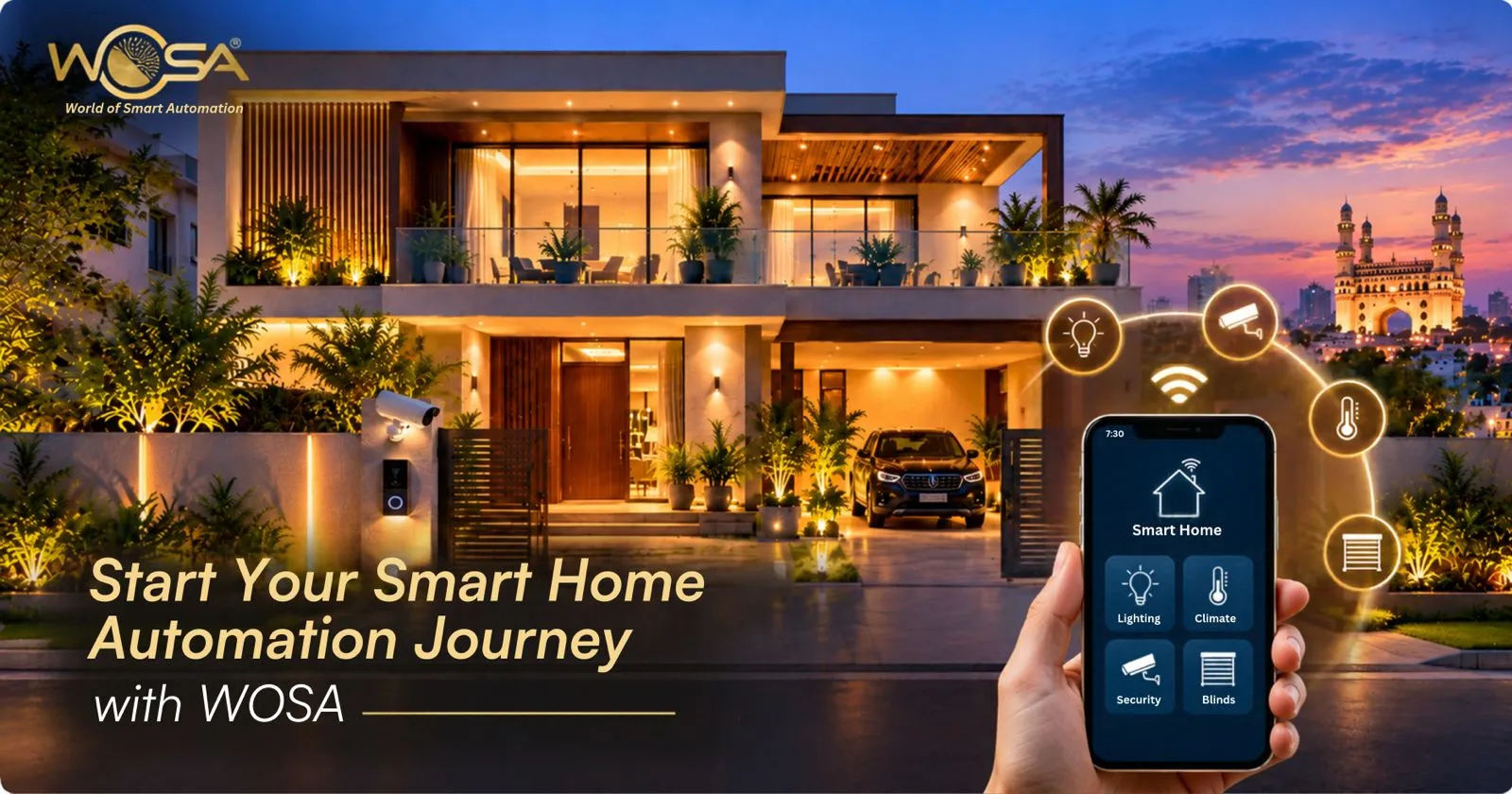
Imagine entering your home after a long day and having the lights, curtains and climate settings respond to your preferences. Your security system keeps you informed, your entertainment setup is easier to operate, and everyday activities require fewer manual steps. This is the idea behind smart home automation.
For homeowners in Hyderabad, home automation offers a way to combine convenience, comfort and technology in one living environment. However, starting a smart home project can feel overwhelming when there are so many products, technologies and installation options.
The best approach is to begin with your needs, understand the available solutions and plan a system that fits your home. WOSA helps homeowners explore automation options for apartments, independent houses and villas.
What Does Starting a Smart Home Journey Mean?
A smart home journey involves more than purchasing a few connected gadgets. It means identifying how you want your home to function and selecting compatible systems that support those requirements.
You may want to automate lighting first, improve entrance security, control air conditioning or integrate entertainment equipment. Some homeowners prefer a few essential features, while others plan a coordinated whole-home system.
There is no single configuration that suits every property. Your ideal setup depends on your lifestyle, floor plan, budget, construction stage and preferred level of control.
Step 1: Identify Your Everyday Needs
Before selecting devices, consider which daily tasks could be easier with automation.
For example:
-
Do you frequently forget to switch off lights?
-
Would you like to control curtains without manually opening them?
-
Do you need convenient access monitoring at your entrance?
-
Would scheduled AC control help manage comfort?
-
Do you want a single command for movie nights or bedtime?
-
Are you planning a new home where automation wiring can be included from the beginning?
Write down your priorities and rank them. This helps separate essential functions from optional upgrades and creates a practical starting point.
Step 2: Explore the Main Smart Home Features
Smart lighting
Lighting automation can support dimming, scheduled operation, occupancy-based control and customised lighting scenes. Different settings can be created for reading, entertaining, relaxing or moving through selected areas at night.
Smart security
Depending on the selected equipment, a smart security setup may include smart door locks, video door phones, CCTV cameras, intrusion sensors and controlled access systems.
Climate control
Compatible AC and VRV/VRF systems may be integrated with schedules and selected automation routines. The objective is to manage indoor comfort more conveniently while avoiding unnecessary operation where possible.
Motorized curtains and screens
Motorized curtains can simplify privacy and daylight management. Motorized projector screens and TV lifts can also be integrated into suitable entertainment setups.
Home theatre and entertainment
An integrated entertainment scene can coordinate compatible lighting, audio, screens and other equipment through a simpler control interface.
Explore the range of options through WOSA's home automation solutions and product range.
Step 3: Choose Wired or Wireless Automation
The right technology should be selected according to your building and requirements.
Wired automation: KNX-based systems are worth considering during new construction or major renovations, when control infrastructure can be planned in advance.
Wireless automation: Zigbee-based solutions may be suitable for certain existing homes and retrofit projects where additional control wiring is difficult or undesirable.
The choice should not be based on technology names alone. Ask about reliability, device compatibility, network requirements, expansion options and support.
WOSA offers KNX and Zigbee options for different property requirements. A site assessment can help determine which approach is suitable for your home.
Step 4: Set a Realistic Budget
Your home automation budget should reflect the functions you want, rather than the number of devices alone.
Important cost factors include:
-
Property size and number of rooms.
-
Number and type of lighting circuits.
-
Security and access-control requirements.
-
AC or climate-control integration.
-
Motorized curtains and entertainment equipment.
-
Wiring, panels, controllers and network infrastructure.
-
Installation, configuration and after-sales support.
A phased approach may help you begin with essential functions and expand later. However, future expansion should be considered during the initial design to avoid unnecessary rework.
For local planning, visit WOSA's home automation consultation page for Hyderabad.
Step 5: Plan Automation Before Interior Work Is Complete
If you are constructing a new house, involve your automation provider during the planning stage. Early coordination with the architect, electrical contractor and interior designer can help establish wiring routes, switch positions, control-panel locations and motorized curtain requirements.
This is particularly important when planning whole-home lighting, centralised controls, automated screens or multiple integrated systems.
For an existing property, the installer should inspect the wiring, available installation space and device compatibility before recommending a retrofit solution.
Step 6: Create Useful Scenes and Routines
The most useful smart home is one that reflects how you live.
A Welcome Home scene might activate selected lights and adjust compatible climate controls.
A Dinner scene could create comfortable dining-room lighting.
A Movie Night scene might dim lights and close motorized curtains.
A Goodnight scene could switch off selected lights and activate compatible security functions.
These routines should be designed around actual habits rather than adding automation simply because a feature is available.
Step 7: Choose a Professional Installation Partner
A well-planned system needs compatible hardware, correct configuration and reliable support. Before selecting an installer, discuss the project scope, product options, warranty terms, maintenance arrangements and future expansion.
Ask for a demonstration of the controls and test the system before handover. Every household member should understand how to operate the app, panels and essential manual controls.
WOSA's published service approach includes consultation, engineering, deployment and ongoing care. Confirm the specific scope and support terms applicable to your project before installation.
For independent background information, the CEDIA smart home guide explains how professional planning can bring connected home systems together.
Why Start Your Smart Home Journey with WOSA?
WOSA provides integrated automation options for lighting, security, climate, motorization and entertainment. Its solutions are intended to suit different property types and homeowner requirements.
Starting with a consultation allows you to discuss your priorities, understand available technologies and determine which features should be implemented first.
Whether you are planning a new villa, upgrading an apartment or modernising an existing house, the aim is to build a system that remains practical as your needs change.
Frequently Asked Questions
1. How do I start my smart home automation journey?
Begin by identifying your priorities, setting a budget, assessing your property's construction stage and choosing compatible devices. Consult an experienced installer before finalising the design.
2. Is home automation suitable for apartments in Hyderabad?
Yes. Apartments can use suitable lighting, security, climate-control and motorization solutions, depending on wiring, permissions and installation requirements.
3. Should I choose wired or wireless home automation?
Wired solutions can be suitable for new builds, while wireless options may work well for some existing homes. The right choice depends on infrastructure, device compatibility and your requirements.
4. Can I add more smart features later?
Yes, if the initial design supports expansion. Discuss future devices, controller capacity, wiring and compatibility before installation.
5. Is professional installation necessary?
Simple devices may be suitable for self-installation, but integrated systems often benefit from professional design, configuration, testing and handover.
6. Where can I explore home automation in Hyderabad?
Visit WOSA's Hyderabad home automation page to review available solutions and request a consultation.
Conclusion
Your smart home journey should begin with the way you want to live, not with a long list of devices. By identifying priorities, choosing suitable technology and planning for future needs, you can create a home that offers convenient control without unnecessary complexity.
WOSA can help you explore smart home possibilities and develop an automation plan suited to your property in Hyderabad.
Visit WOSA to discuss your smart home requirements.