
Blog · 2026-08-26
What Is Home Automation and How Does It Work?
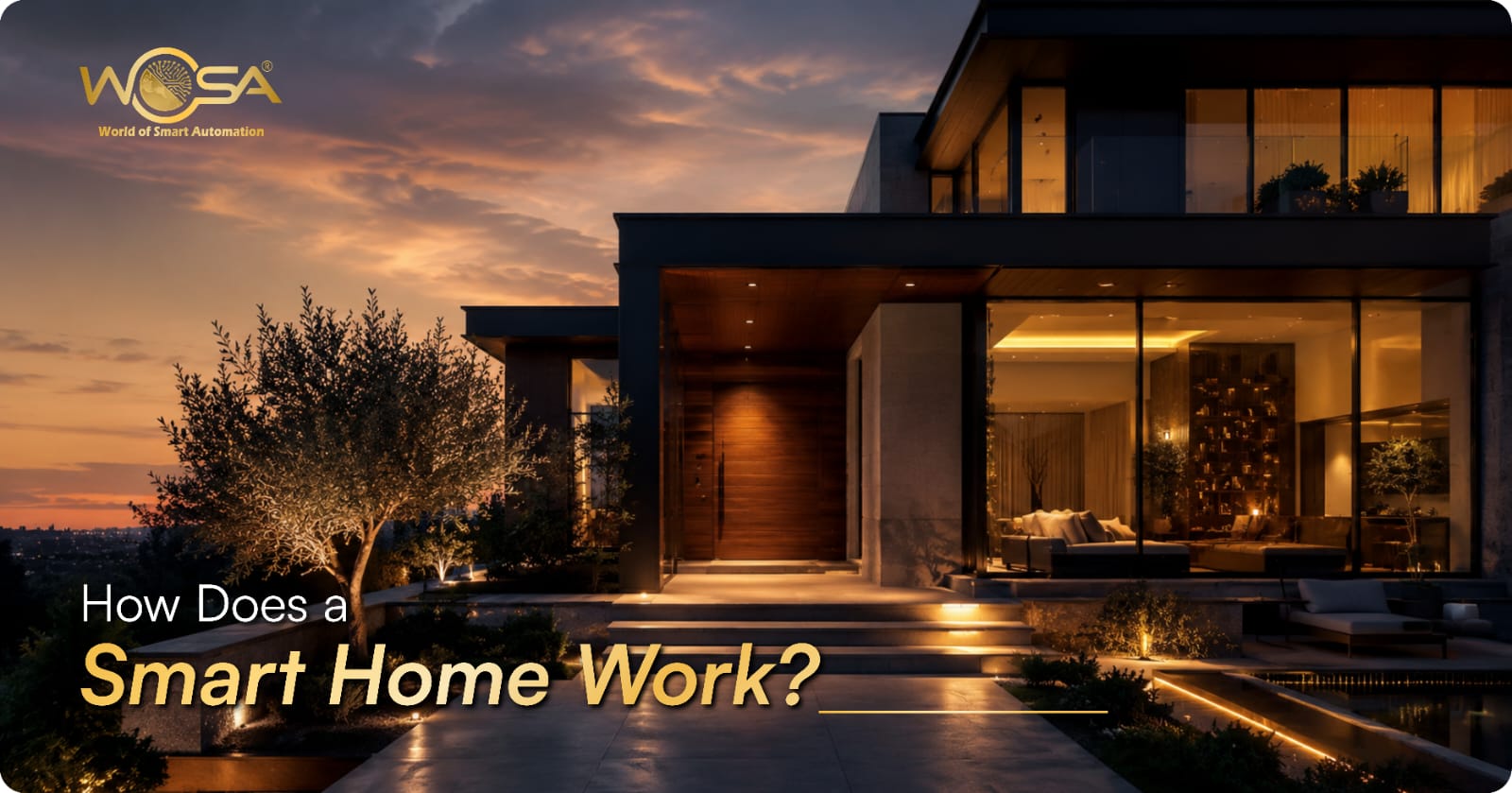
In today’s fast-paced world, technology is transforming the way we live, and home automation is leading this change. A smart home allows homeowners to control lighting, security, climate, entertainment, and other devices automatically or remotely using a smartphone, tablet, or voice assistant. From improving comfort to enhancing security and energy efficiency, home automation systems are becoming an essential part of modern living.
Understanding Home Automation
Home automation is the process of connecting and controlling different electronic devices within a home through a centralized system. These devices communicate through technologies such as Wi-Fi, Zigbee, Bluetooth, or KNX-based automation networks. With smart home automation, homeowners can manage multiple functions from a single interface, whether they are at home or away.
For example, you can switch off all lights with one tap, automatically close curtains during the afternoon heat, or receive instant alerts when motion is detected near your entrance. Smart systems are designed to make everyday tasks easier, safer, and more efficient.
How Does a Smart Home Work?
A smart home works by connecting devices to a central automation hub or application. Sensors, controllers, and smart devices interact with each other to perform automated actions based on schedules, voice commands, or real-time conditions.
Here’s how the process typically works:
-
Smart Devices: These include smart switches, sensors, cameras, locks, thermostats, and speakers.
-
Connectivity: Devices communicate through wired or wireless networks.
-
Automation Rules: Users can create schedules or scenes such as “Movie Mode” or “Night Mode.”
-
Remote Access: Mobile apps allow homeowners to monitor and control systems from anywhere.
For instance, a lighting automation setup can automatically dim lights in the evening, while smart lighting systems can adjust brightness based on natural daylight. Similarly, smart security systems can send alerts to your phone if unusual activity is detected.
Benefits of Home Automation Systems
1. Convenience
One of the biggest advantages of smart home automation is convenience. You can control multiple devices using a single app or voice command. Whether it’s turning on the AC before arriving home or controlling entertainment systems without leaving the couch, automation simplifies daily life.
2. Energy Efficiency
Smart lighting systems and climate controls help reduce energy consumption. Automated lights can turn off when rooms are empty, and temperature settings can adjust automatically based on occupancy. Studies and industry implementations show that intelligent automation can significantly improve energy efficiency.
3. Enhanced Security
Modern security systems offer real-time monitoring, AI-based CCTV cameras, video door phones, intrusion alerts, and biometric locks. These home security systems provide peace of mind by allowing homeowners to monitor their property from anywhere.
4. Personalized Living
Automation allows homeowners to create personalised scenes for different activities. A single touch can adjust lights, curtains, music, and temperature for movie nights, relaxation, or work sessions.
The Future of Smart Living
As technology continues to evolve, home automation systems are becoming more intelligent and user-friendly. Smart homes are no longer considered a luxury; they are quickly becoming the standard for modern living. From lighting automation to advanced smart security systems, automation is reshaping how we experience comfort, convenience, and safety at home.
If you are planning to upgrade your lifestyle with advanced smart home automation, explore innovative solutions from WOSA – World of Smart Automation. Their expertise in home automation, smart lighting systems, and home security systems helps create intelligent living spaces designed for modern homeowners.
For more details ContactUs